The Conflicting Narratives: Trump and Rubio on US Entry into Iran Strikes
In the volatile theater of Middle Eastern politics, clarity and consistent messaging from world leaders are paramount. However, recent events surrounding U.S. military action against Iran revealed a striking divergence in explanations from key American figures: President Donald Trump and his Secretary of State, Marco Rubio. Their differing justifications for the strikes created a whirlwind of confusion, sparking debate over the true impetus behind Washington's involvement. At the heart of this controversy lies a crucial question: was the U.S. compelled into action by its ally Israel, or was it an independent, preemptive strike based on direct threats?
The initial statements and subsequent clarifications have left many observers grappling with the official narrative. This article delves into the contrasting viewpoints presented by Trump and Rubio, dissects the implications of such discrepancies, and offers insights into navigating the complexities of high-stakes international relations. The focus here is not just on the events, but on the profound impact that official communications have on public perception and geopolitical stability.
The Shifting Sands of Justification: Rubio's Evolving Narrative
The initial wave of commentary and concern began when Secretary of State Marco Rubio's remarks suggested a strong connection between U.S. actions and anticipated Israeli military movements. A viral social media post quoted Rubio stating, "The president made the very wise decision—we knew that there was going to be an Israeli action, we knew that that would precipitate an attack against American forces, and we knew that if we didn’t preemptively go after them before they launched those attacks, we would suffer higher casualties.” This statement, widely interpreted by critics as implying Israel had, in essence, "dragged" the U.S. into the conflict, immediately drew scrutiny.
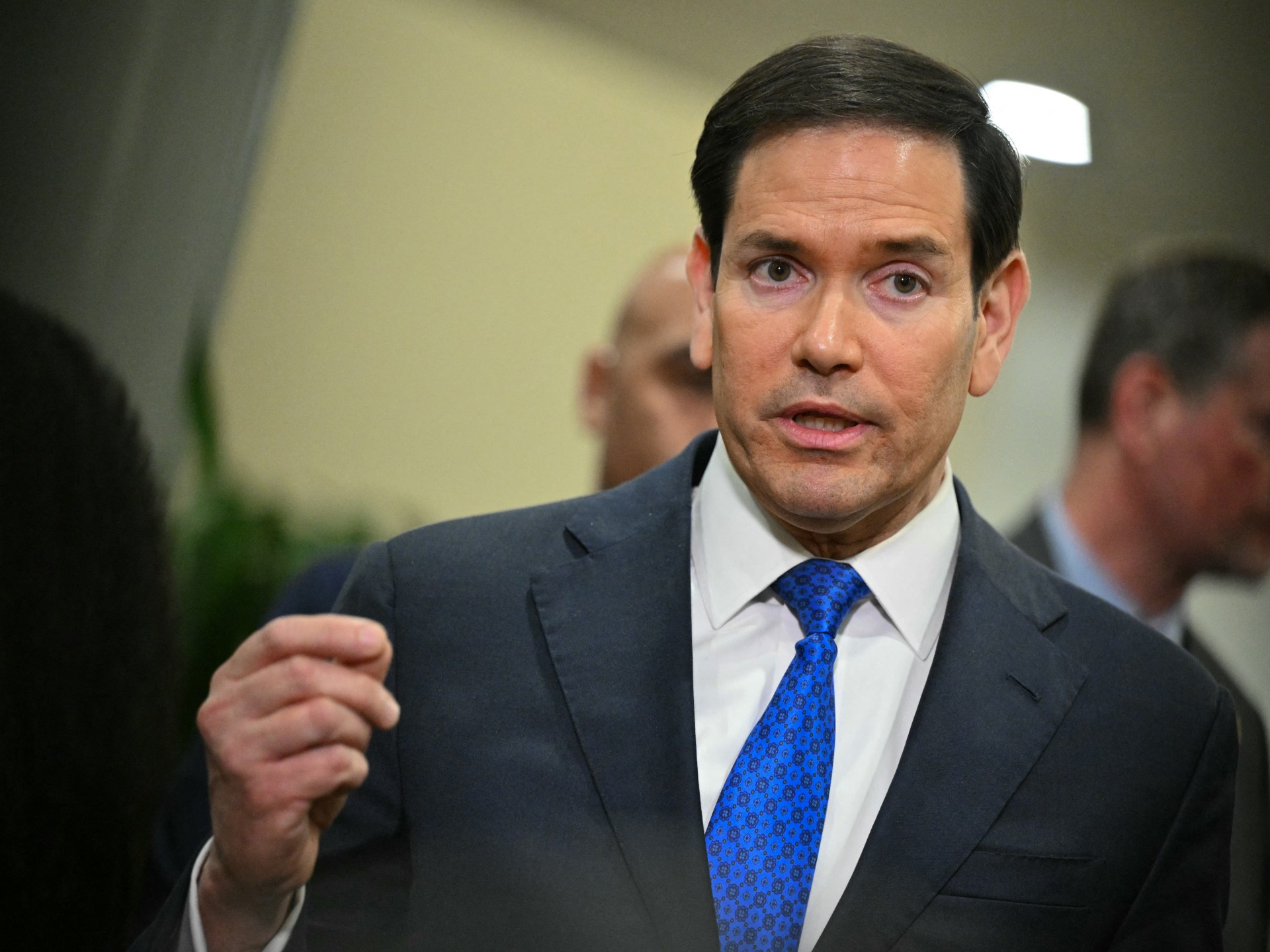
However, the narrative soon shifted. The White House, through press secretary Karoline Leavitt, swiftly moved to clarify, issuing a forceful denial: “No, Marco Rubio Didn’t Claim That Israel Dragged Trump into War with Iran.” Leavitt shared a video where Rubio himself directly addressed the accusation. When asked if Israel had forced the U.S. hand, Rubio unequivocally stated, "No... No matter what, ultimately, this operation needed to happen — that's the question of 'why now?'”
In this crucial clarification, Rubio denies US strikes were a direct consequence of Israeli pressure. Instead, he presented a new, more strategic rationale for the timing of the U.S. military operation. He argued that the U.S. intervention was necessary to prevent Iran from reaching an "immunity line" within approximately 12 to 18 months. This "immunity line" referred to a point where Iran would possess such a formidable arsenal of short-range missiles and drones that "no one could do anything about it because they could hold the whole world hostage.” This reframing transformed the discussion from reactive entanglement to a preemptive measure against a growing, long-term existential threat posed by Iran's advanced missile capabilities. For more details on this evolving justification, see Rubio Denies Israel Forced US Strikes, Offers New Justification.
President Trump's Direct Counter-Narrative
Adding another layer of complexity to the official stance was President Donald Trump's own explanation, which starkly contrasted with, and actively rebutted, the initial interpretations of Rubio's comments. Trump emphatically denied being "bounced into attacking Iran because Israel had already decided to do so." His rejection of Israeli influence was clear: "No. I might have forced their hand. We were having negotiations with these lunatics, and it was my opinion that they were going to attack first. They were going to attack. If we didn’t do it, they were going to attack first. I felt strongly about that.”
Trump's narrative presented the U.S. strikes as a unilateral, preemptive measure born from his personal conviction that Iran was poised for an imminent attack on American forces. This justification removed any suggestion of the U.S. being reactive to an ally's agenda, instead positioning the decision as a direct response to a perceived, immediate threat to U.S. interests. The President's assertion of independent decision-making underscored his administration's desire to control the narrative surrounding military engagements, especially amidst domestic and international criticism. For a deeper dive into the White House's stance, refer to US-Iran Strikes: White House Denies Israel Dragged US Into Conflict.
Analyzing the Discrepancy: Why the Contradiction Matters
The conflicting rationales offered by President Trump and Secretary Rubio are not mere semantic differences; they carry significant weight and implications for both domestic and international audiences. Such discrepancies can erode public trust, confuse allies, and potentially embolden adversaries.
- Erosion of Public Trust: When top officials offer differing accounts of critical decisions, it can lead to public skepticism regarding the transparency and coherence of government policy. Citizens rely on clear, consistent information during times of crisis to understand and support their nation's actions.
- Impact on Alliances: Allies in the region, particularly Israel, are keenly attuned to the reasons behind U.S. military moves. Conflicting statements can create uncertainty about the nature of their strategic partnership and the reliability of U.S. commitments.
- Signaling to Adversaries: For Iran, contradictory messages from Washington could be interpreted as a sign of internal discord, potentially influencing their own strategic calculations and responses. A united front is often critical for effective deterrence.
- Policy Coherence: At a fundamental level, the lack of a singular, consistent explanation raises questions about the coordination and alignment within the executive branch regarding critical foreign policy decisions.
One possible explanation for the divergence could be an attempt to satisfy different political constituencies. Rubio's initial framing, emphasizing preempting Iranian retaliation against U.S. forces due to Israeli action, might appeal to those concerned about the safety of American troops. His later "immunity line" argument presents a broader, long-term strategic rationale. Trump's immediate threat assessment aligns with a "America First" posture, directly addressing an imminent threat to U.S. interests without implying external influence.
The Geopolitical Chessboard: Iran's Missile Capabilities and Regional Stability
Rubio's concept of an "immunity line" highlights a persistent concern among U.S. and allied intelligence communities regarding Iran's missile and drone programs. Iran has historically invested heavily in developing a diverse arsenal of ballistic and cruise missiles, as well as unmanned aerial vehicles (UAVs). These capabilities are central to Iran's regional power projection and deterrence strategy.
The fear of Iran reaching an "immunity line" suggests a scenario where Tehran's missile and drone capabilities become so extensive and sophisticated that any preemptive strike against them becomes unacceptably costly or simply impossible without provoking massive retaliation. This would give Iran an unassailable strategic advantage, allowing it to "hold the whole world hostage" in a regional context. The U.S. and Israel have long viewed Iran's missile program as a destabilizing force, capable of targeting not only regional adversaries but also global shipping lanes and oil infrastructure, thereby posing a significant threat to global economic stability.
Navigating the Fog of War: Tips for Understanding Complex Geopolitical Events
In an era of rapid information dissemination and often conflicting narratives, it is more important than ever to critically evaluate geopolitical developments. Here are some practical tips for understanding complex situations like the U.S.-Iran strikes:
- Fact-Check Multiple Sources: Do not rely on a single news outlet or social media feed. Cross-reference information from reputable international and domestic news organizations, think tanks, and official government statements.
- Differentiate Between Official and Unofficial Statements: Understand that a presidential declaration carries different weight than a tweet from a press secretary or an off-the-cuff remark to reporters. Look for formal policy announcements and speeches.
- Consider Underlying Motivations: Every statement from a political leader or government official is often carefully crafted to achieve specific objectives – whether it's reassuring allies, deterring adversaries, or managing domestic public opinion. Ask what purpose a particular narrative serves.
- Seek Historical Context: Current events rarely occur in a vacuum. Understanding the historical relationship between countries, past conflicts, and long-standing grievances can provide crucial insight into present actions.
- Analyze the Impact on Various Stakeholders: Consider how a particular event or statement might affect different countries, political factions, economic interests, and human populations in the region. Geopolitics is a multi-faceted game.
The contradictory explanations from Trump and Rubio regarding the U.S. strikes on Iran highlight the intricate challenges of communicating foreign policy decisions, especially during times of crisis. While Rubio denies US strikes were directly coerced by Israel, offering a long-term strategic justification, Trump firmly asserted an immediate, independent U.S. preemptive action against an imminent Iranian threat. These differing narratives underscore the importance of consistent messaging in maintaining credibility and clarity on the global stage. As the U.S.-Iran relationship remains fraught with tension, the global community will continue to scrutinize every statement, seeking a coherent and transparent understanding of the path forward in this critical region.